
What Is a LVAD?
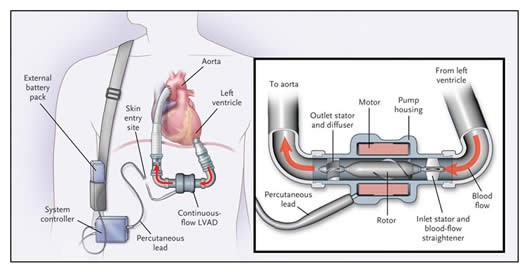
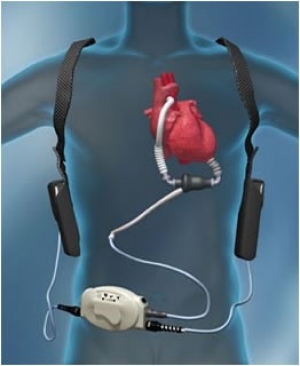
A left ventricular assist device (LVAD) is a pump that we use for patients who have reached end-stage heart failure. We surgically implant the LVAD, a battery-operated, mechanical pump, which then helps the left ventricle (main pumping chamber of the heart) pump blood to the rest of the body. LVADs can be used as:
- Bridge-to-transplant therapy: This is a life-saving therapy for patients awaiting a heart transplant. Patients use the LVAD until a heart becomes available. In some cases, the LVAD is able to restore the failing heart, eliminating the need for a transplant. Learn more about heart transplant.
- Destination therapy: Some patients are not candidates for heart transplants. In this case, patients can receive long-term treatment using an LVAD, which can prolong and improve patients' lives.
LVAD program at Stanford Health Care: Why choose us?
For patients with end stage heart failure, our LVAD program offers hope. We are one of the most experienced LVAD clinics in the region. In fact, our researchers were instrumental in developing LVAD therapy, leading to the first successful "bridge-to-transplant" implant in 1984. Features of our care include:
- Experience: Our Stanford's Heart Failure and Cardiomyopathy Clinic has more than 30 years of research and clinical experience. Learn more about our Heart Failure and Cardiomyopathy Clinic.
- Latest treatments: Our involvement in heart failure research means we are at the forefront of the latest advancements in the diagnosis and treatment of heart failure. We have the newest devices available today and our experts work with every type of device.
- Minimally invasive approaches: Our cardiac surgeons have invented new ways to implant LVADs that avoid splitting the breast bone.
- High volume: We are one of only two destination therapy programs in the Bay Area and one of seven in all of California. We treat the highest volume of patients in the Bay Area, giving us a superior level of experience and expertise.
LVAD implantation: What to expect
We will first determine what type of LVAD patient you are: either bridge-to-transplant or destination therapy. This designation may change depending on your health. Learn more about what to expect during LVAD implantation, including pre-operative instructions, your recovery and follow up.
About the LVAD device
The job of the LVAD is to help your weakened left ventricle pump blood. Unlike in the past, LVAD devices are now portable. This means you can return home with the LVAD and continue your normal activities while waiting for a heart to become available. In order to receive an LVAD, we need to perform a number of tests to determine that you are a good candidate for the device.
Learn more about the LVAD device and the LVAD evaluation process.
Complications from an LVAD
Like with any heart device, there can be complications. We monitor you closely to prevent and manage any complications related to the device. Learn more about complications from an LVAD.
LVAD: Frequently asked questions
Find out answers to some frequently asked questions, including:
- Who can get an LVAD?
- How will my medications changed after an LVAD procedure?
- What is life like after a VAD implantation?
Left Ventricular Assist Device
We are one of the most experienced clinics in the region for LVAD, a life-saving therapy for heart failure patients that our researchers helped develop.
left ventricular assist device
LVAD
heart pumps